
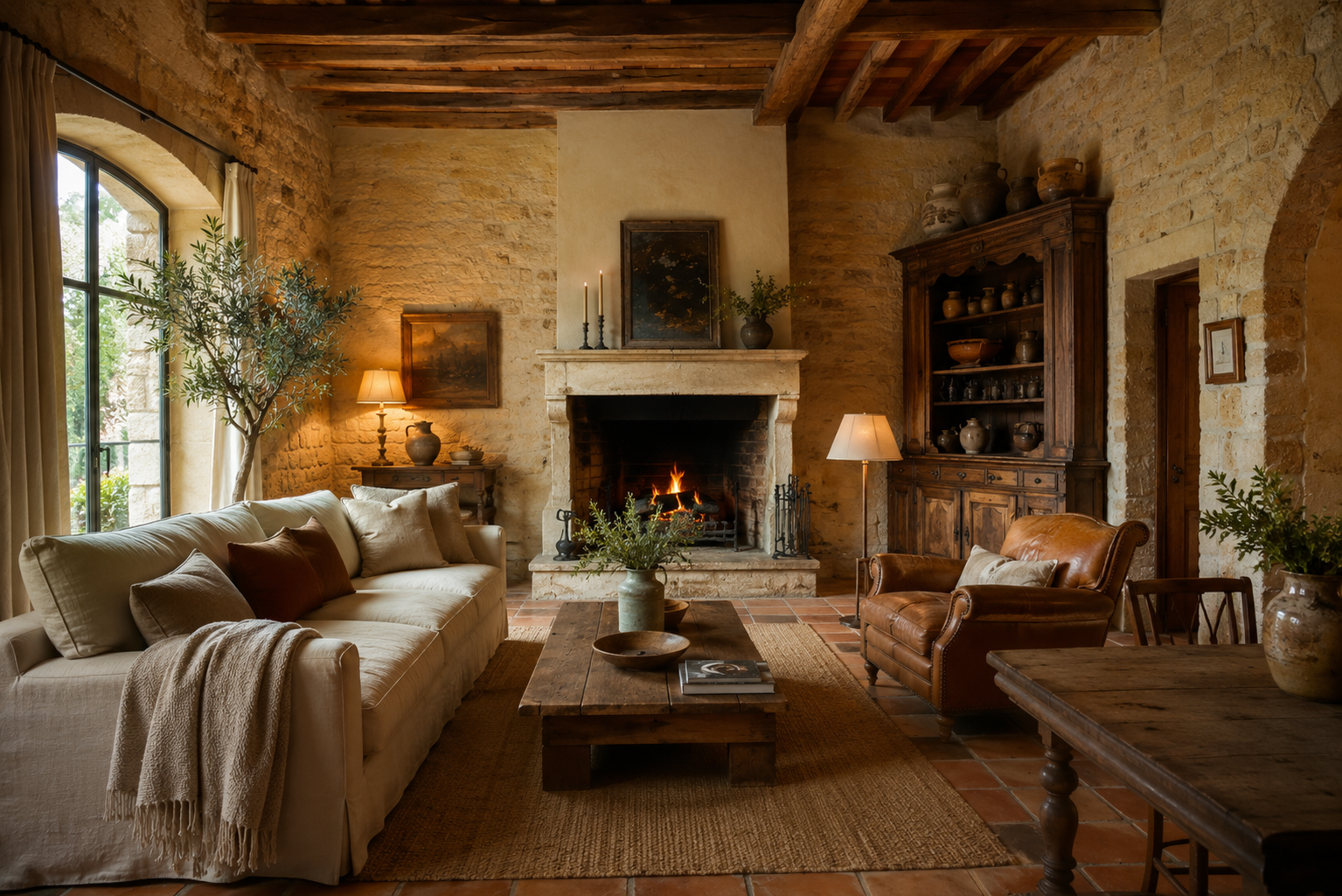
Warmth in an interior is not achieved by accumulating decorative objects or multiplying soft furnishings. It results from a coherent set of choices — materials, light, proportions, colour — that together create an atmosphere in which one feels at ease immediately upon entering.
The role of natural materials
In a character house, natural materials are the first vector of warmth. Raw wood, natural stone, linen, wool, unglazed terracotta, aged leather: these materials have a sensory quality — texture, temperature, smell — that synthetic materials cannot reproduce. Their presence creates an immediate sense of comfort that no sophisticated decoration can compensate for in their absence.
Light: the determining factor
Nothing is more hostile to warmth than harsh overhead lighting. A warm interior is built on a multiplicity of low light sources: floor lamps, bedside lamps, candles, discreet spotlights grazing a wall. The quality of the light — warm colour temperature (around 2700K), diffuse rather than directed — transforms the perception of a space more than any other decorative choice.
Colour and tonality
Warm tones — ochre, terracotta, linen, warm grey, deep green — create a contained atmosphere conducive to comfort. Conversely, very cold whites or highly saturated colours can undermine the warmth of an otherwise well-designed space. The choice of a dominant tone, coherent throughout the house, contributes to the unity and serenity of the ensemble.
Proportions and furniture arrangement
A too-empty room is cold; a too-full room is stifling. The balance between furnished space and breathing space is a fundamental aesthetic question. In a character house with beautiful architectural volumes, it is often preferable to have fewer, better-chosen pieces of furniture than to fill each corner.