
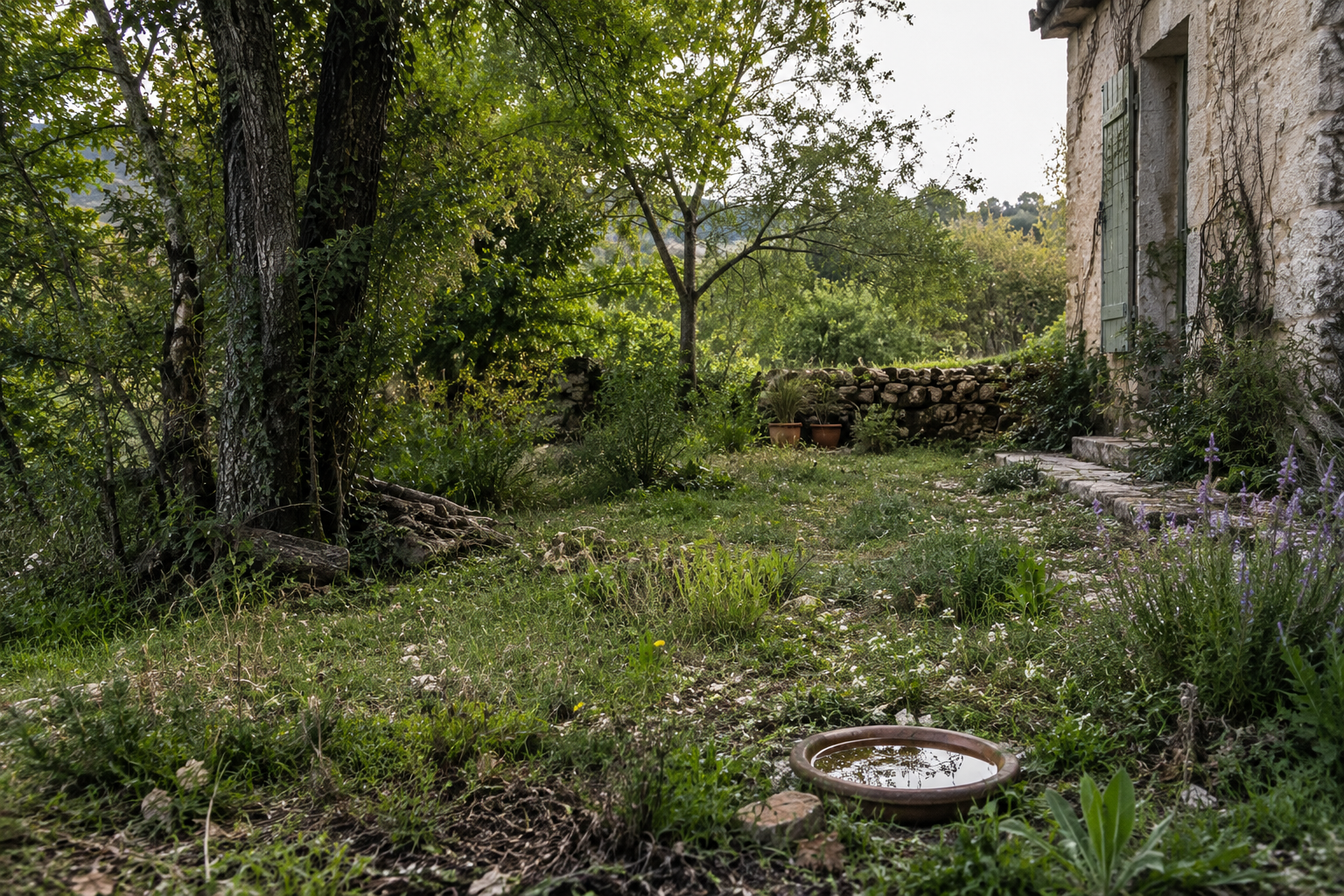
Creating a welcoming ecosystem for wildlife on one’s property is not simply an ecological act. It is also a way of enriching the quality of everyday life and contributing to the ecological coherence of the landscape.
Understanding the conditions necessary for wildlife
Wildlife — birds, insects, small mammals, reptiles, amphibians — needs three essential things: food, shelter and water. A garden or property that provides these three elements naturally becomes an ecological corridor, a refuge for species and a living laboratory of biodiversity.
Concrete actions to attract wildlife
Some interventions are simple and immediately effective: keeping areas of rough grass unmown (hedgehog refuge, insect habitat), maintaining a woodpile or stone pile in a quiet corner, installing nest boxes appropriate to local species, preserving old hollow trees, creating a small pond or water basin, planting melliferous species (lavender, borage, thyme, wild marjoram).
Choosing the right plants
A garden composed exclusively of exotic ornamental species offers little to local wildlife. Reintroducing indigenous species — wild rose, hawthorn, dogwood, blackthorn, hornbeam — creates real ecological value while maintaining an aesthetic coherent with the character of a southern French property.
A dynamic that enriches the property
A property surrounded by rich biodiversity has a different quality — perceptible from the first visit. The song of birds in the morning, the dance of butterflies in summer, the rustle of a hedge animated by small mammals: these are elements of quality of life that do not appear in any technical diagnostic but that sensitive buyers feel immediately.