A home is more than just a space to live in. It is a sanctuary, a place to restore oneself. Yet a cluttered space often reflects a cluttered mind. Adopting a Feng Shui approach to organising your home can not only transform your interior but also contribute to your daily well-being.
1. Feng Shui: an approach to harmony
Feng Shui, which literally means « wind » and « water », is based on the idea that energy — called « chi » — circulates harmoniously between spaces and those who inhabit them. From this perspective, a disordered home creates a sensation of stagnation, while organising it helps restore clarity and serenity.
2. Why is organisation essential?
A poorly organised interior generates stress, affects productivity and can even impact relationships. Some key reasons why good organisation matters: mental clarity (an ordered home calms the mind and stimulates concentration), a sense of space (Feng Shui holds that every object must « breathe » — the less clutter, the more fluid and soothing the space), better quality of rest (a bedroom without clutter promotes deeper sleep).
3. Feng Shui principles applied to organisation
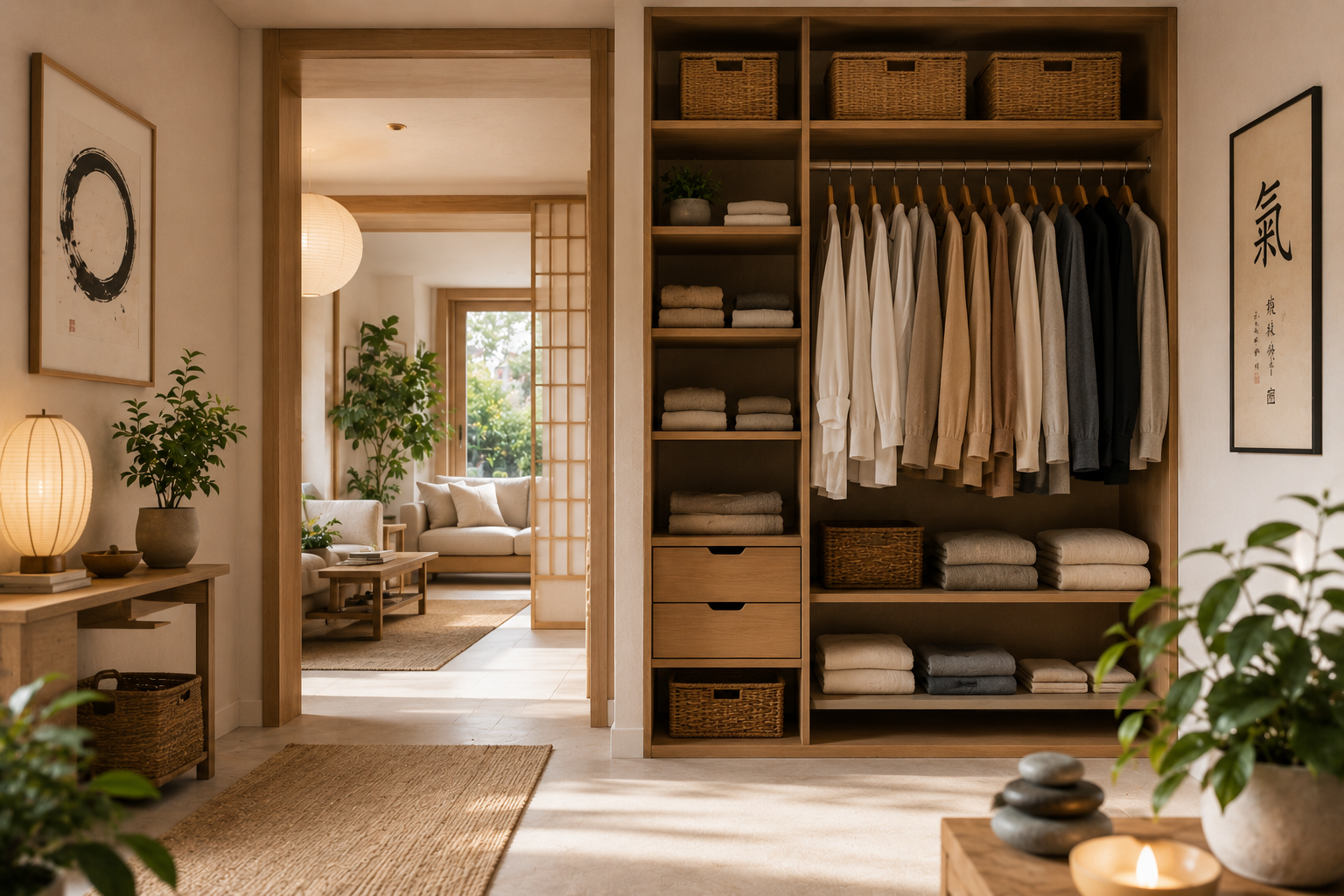
Free the entranceway (in Feng Shui, the entrance is where energy enters the home — it should be clear and welcoming), organise by zones (each room has a specific function; avoid mixing roles), eliminate what no longer serves you (objects that are no longer used block energy circulation), prioritise natural materials (wood, linen, stone promote a healthy and grounded environment).
4. Feng Shui and character properties
In a character home — bastide, old stone house, manor — Feng Shui principles integrate naturally with the quality of the architecture. Old buildings often have natural energy qualities: thick walls that store freshness, proportioned rooms, natural materials. Good organisation amplifies these qualities rather than obscuring them.