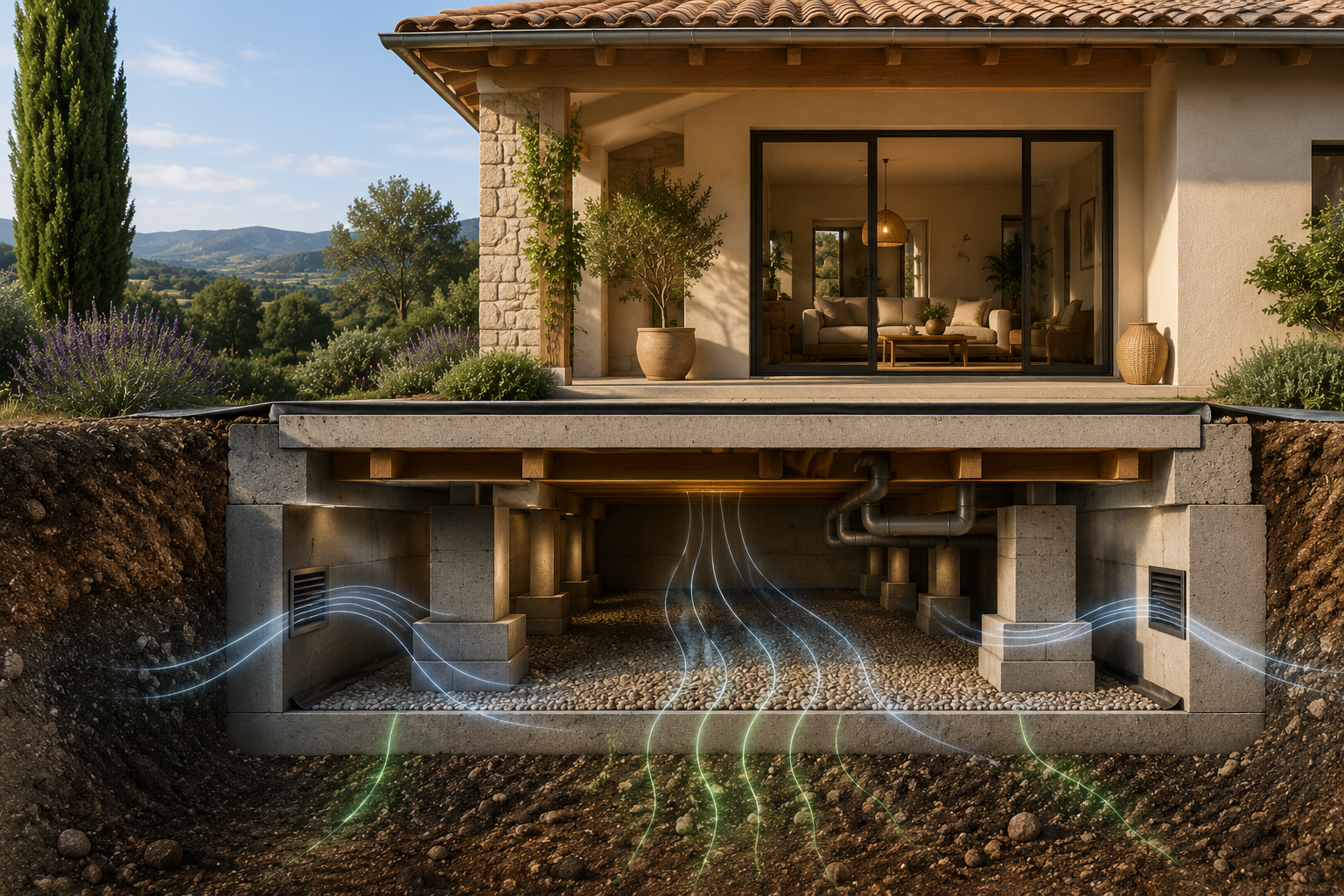
The crawl space — the cavity between the ground and the first floor of a building — is often an overlooked element in the analysis of a property’s balance. Yet it can play a significant role in the quality of life within the habitat.
The technical role of the crawl space
From a technical perspective, a well-ventilated crawl space protects the wooden structure of the floor from moisture, prevents the rise of damp and contributes to the thermal and acoustic insulation of the first floor. A poorly ventilated or flooded crawl space, on the other hand, generates moisture problems, structural degradation and air quality issues in the living space above.
A broader perspective
Beyond the technical dimension, some approaches to space and habitat — including Feng Shui — consider that the quality of the ground and the sub-floor space directly influences the energy quality of the spaces above. A healthy, dry crawl space, well connected to its environment, supports a stable and comfortable living quality. A problematic crawl space — flooded, blocked, forgotten — can contribute to a feeling of heaviness or instability in the home above.
Practical recommendations
Inspecting a crawl space before purchasing an old property is essential: check ventilation (sufficient openings, free from obstructions), moisture (no standing water, no mould traces on joists), structure (no deterioration of beams or bearings), and any infestations. These inspections, simple in themselves, can reveal significant hidden problems.