In a character property surrounded by nature, the question of a swimming pool often arises — but the conventional tiled pool is increasingly at odds with the aesthetic and ecological ambitions of its owners. Natural pools and ecological basins offer a serious alternative: they integrate into the landscape rather than occupying it.
What is a natural pool?
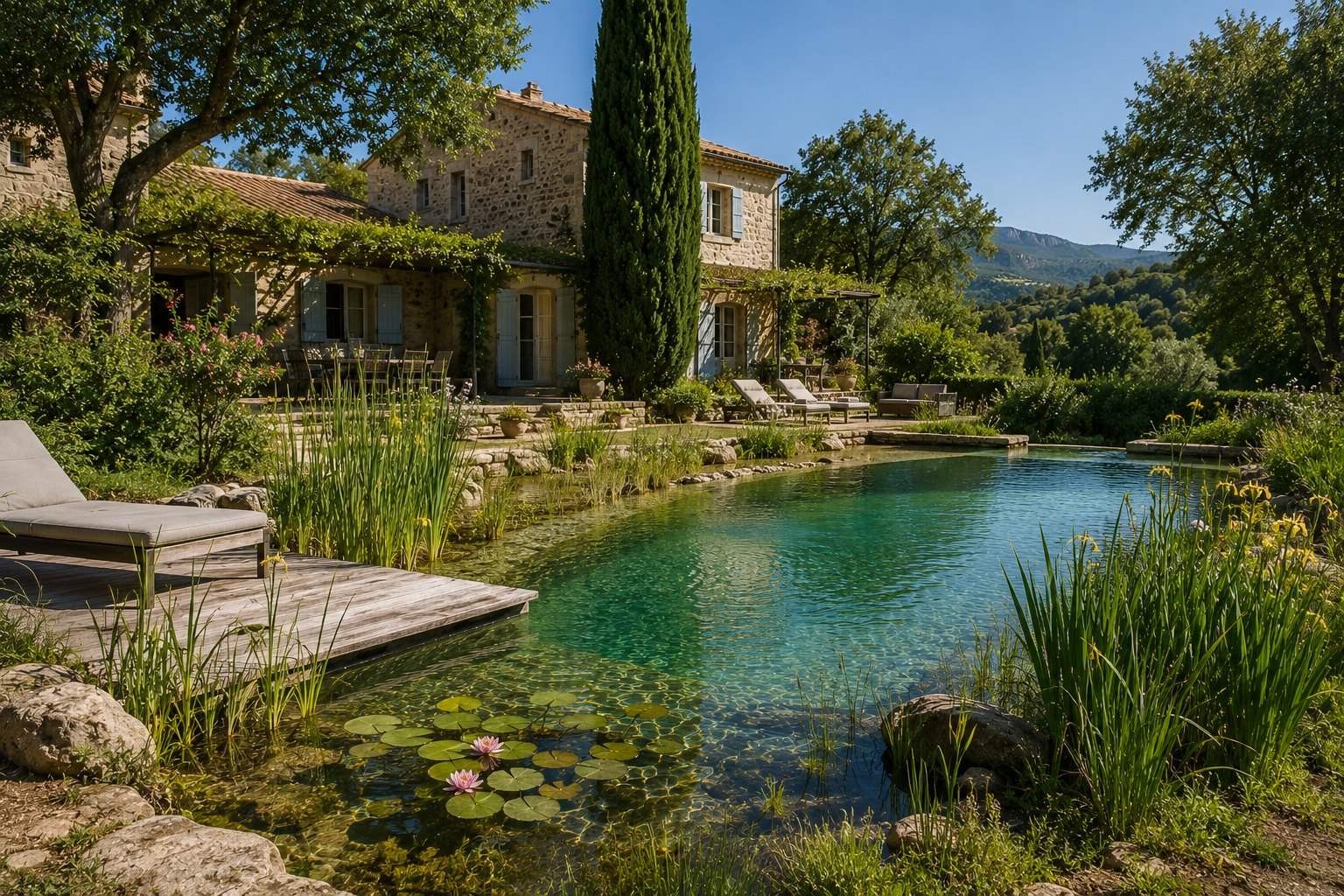
A natural pool, also called a biological swimming pond, is a body of water designed for bathing that uses aquatic plants and natural filtration processes to maintain water quality — without chemicals, without chlorine, without automatic treatment systems. It is divided into two zones: a swimming area and a regeneration zone where plants do the work of filtration.
Integration into the landscape
Unlike a conventional pool with its rectangular geometry and turquoise blue, a natural pool can take on organic shapes, use local materials for its edges (stone, slate, wood), and integrate naturally into the garden. In a Provençal setting, surrounded by garrigue or in a wild garden, this type of installation becomes a landscape element in its own right rather than an incongruous structure.
An ecological but demanding installation
A natural pool requires a different type of maintenance than a conventional pool: regular cutting of aquatic plants, monitoring of biological balance, raking of sediment. It is less restrictive in terms of chemicals but requires more attention in terms of ecosystem management.
Added value for a character property
For buyers who are sensitive to environmental quality and the consistency of spaces, a well-designed natural pool or ecological basin is a genuine added value: it reflects an overall approach to the property, consistent with the aesthetic and ecological quality they seek.