
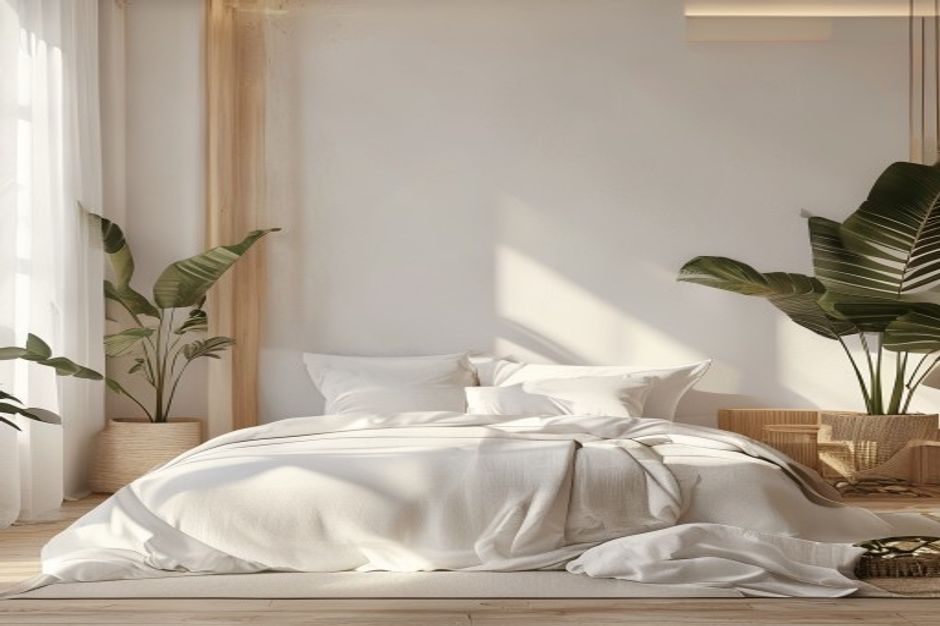
Your home influences your well-being much more than you might think. From the quality of light to the organisation of spaces, from the acoustic environment to the history of the place: multiple factors contribute to how you feel in your home every day.
Light: the primary factor
The quality and quantity of natural light in a home has a direct impact on mood, energy level and sleep quality. A poorly lit home — oriented to the north, with small windows, obstructed by vegetation or neighbouring buildings — creates a chronic energy deficit. Improving the light in a space (cleaning windows, trimming obstructing vegetation, adding mirrors, choosing lighter colours) is one of the simplest and most impactful interventions.
Acoustic quality
A noisy environment — road traffic, aircraft noise, noisy neighbours — generates chronic low-level stress that wears down those who live in it. Conversely, a naturally calm environment — birdsong, the wind in trees, silence — supports a quality of rest and presence that profoundly influences daily well-being.
Organisation of space and circulation
The way a space is organised — the arrangement of furniture, the circulation between rooms, the management of storage — directly influences the ease of daily life. A cluttered or poorly configured space creates micro-frictions that accumulate over the course of a day. A fluid and organised space facilitates movement, thought and rest.
When to consider a deeper intervention
If, despite good light, good acoustic quality and good organisation, you continue to feel uncomfortable in your home — a persistent heaviness, an inexplicable reluctance to return, a difficulty being in certain rooms — it may be worth exploring the less visible dimensions of the place: its history, its energetic balance, its relationship with the land.