
Energy renovation has become a central issue in French real estate — and a source of considerable confusion for property owners. Regulatory changes, evolving subsidies, technological complexity: finding one’s way through this market requires a clear head.
A framework in constant evolution
The regulatory framework governing energy renovation in France has been revised several times in recent years: the MaPrimeRénov’ scheme, energy performance certificates (EPCs), restrictions on the letting of thermal sieves (F and G rated properties), obligations at the time of sale. Each revision modifies the rules of the game — and not always in a clearly communicated way.
Character properties: specific constraints
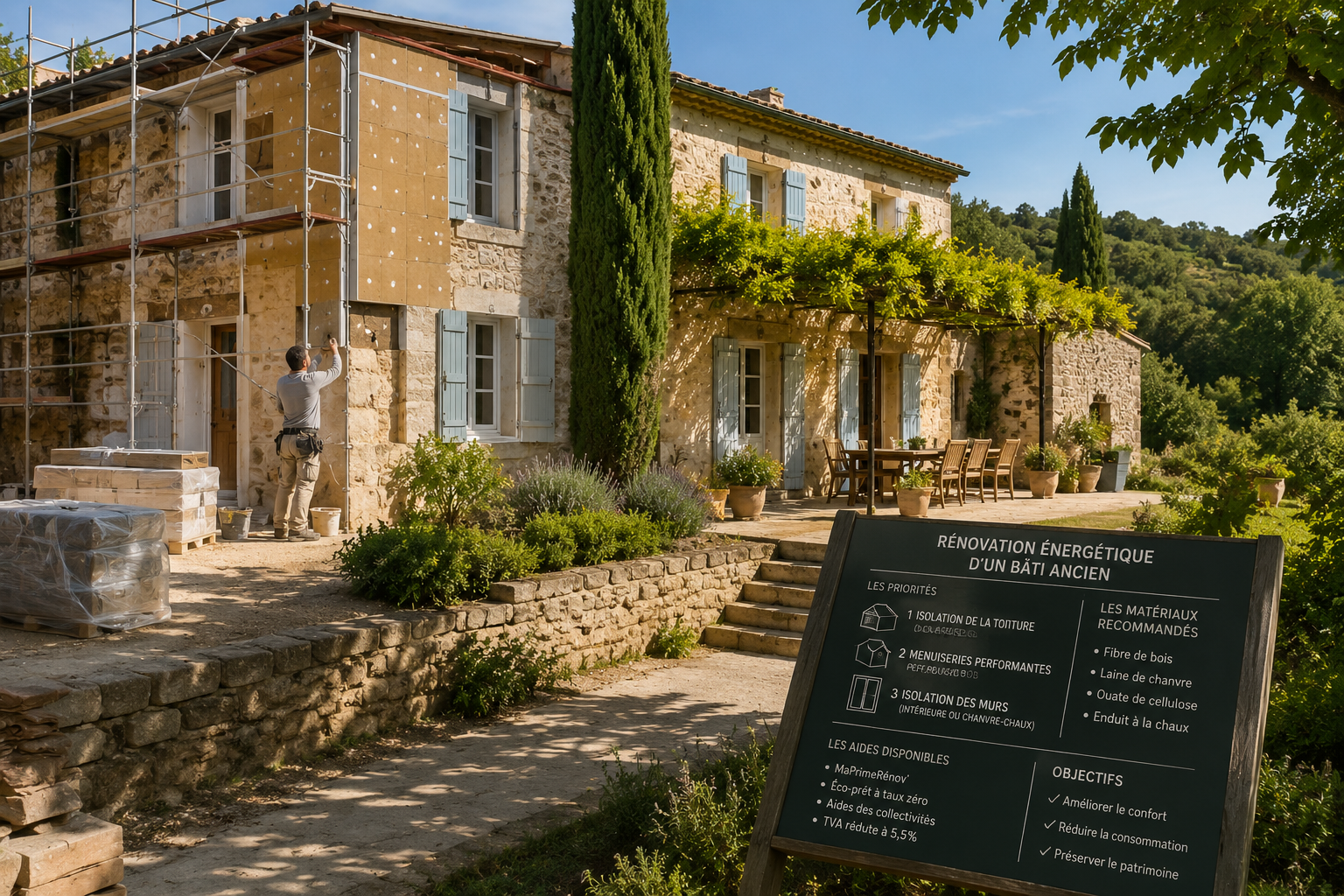
For owners of old or character properties, energy renovation presents particular challenges. Stone walls, old frameworks, listed facades: the interventions applicable to modern buildings are not always transposable. Over-insulating an old stone building can generate moisture and structural problems more serious than those it sought to correct.
Prioritising the right actions
Not all renovation work has the same impact. In an old house, the priority is often: roof insulation, replacing single-glazed windows, improving ventilation, and optimising the heating system. More complex and costly interventions (external wall insulation, heat pump, geothermal) should only be considered once the basics are in place and the building has been studied as a whole.
Subsidies: what you need to know
MaPrimeRénov’, zero-rate eco-loan, local authority grants: the available schemes are numerous but complex. Eligibility conditions, income brackets, recognised workmen (RGE label), eligible work categories: the landscape changes regularly. Consulting an independent energy advisor (ADIL, ANAH, certified advisor) before committing to a project is advisable.