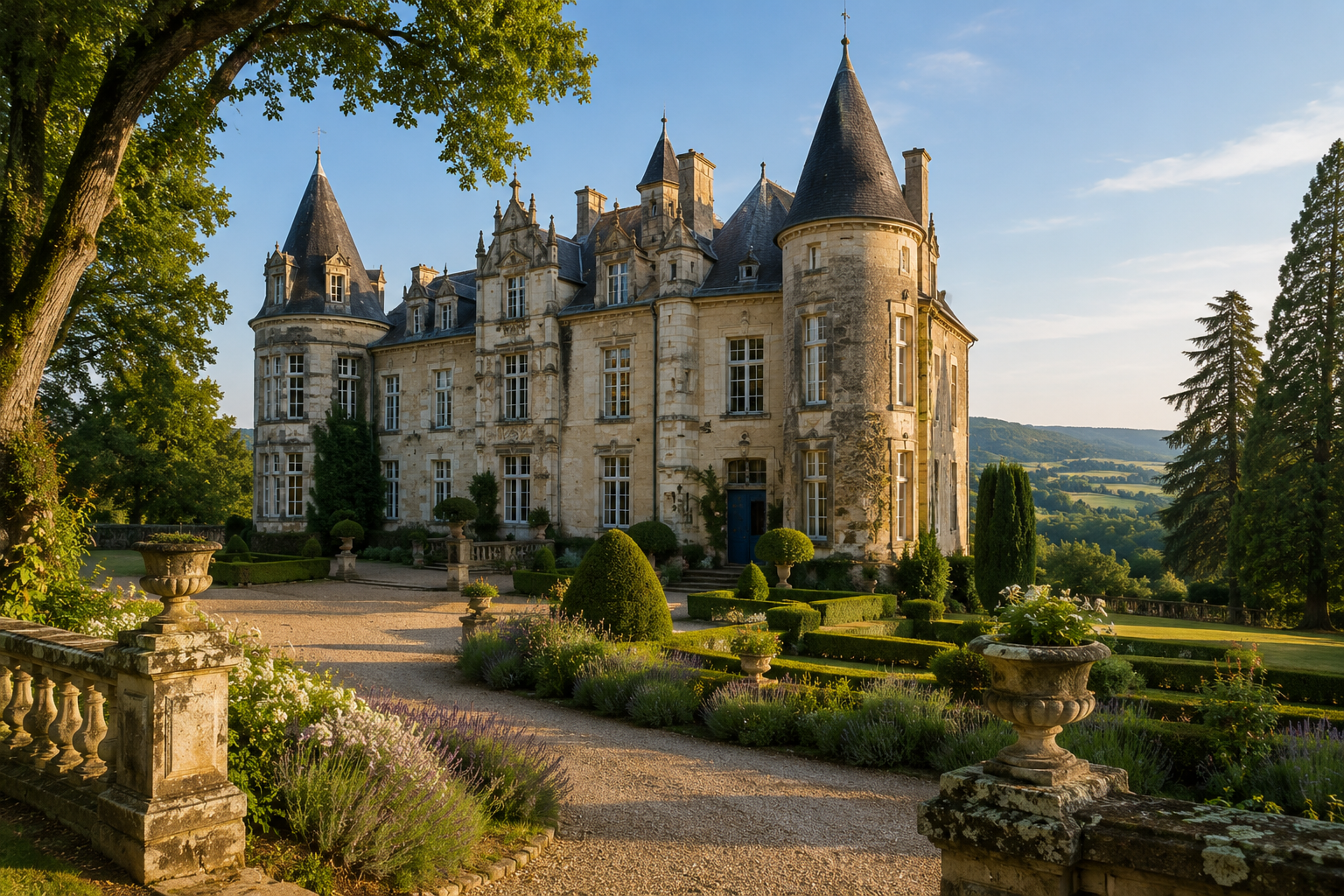
A château or estate is not simply a property. It is a living heritage: an architectural object shaped over centuries, linked to a territory, carrying a history that goes well beyond its walls.
A specific market
The market for châteaux and estates in France is characterised by its diversity and its opacity. Prices vary enormously depending on region, state of conservation, size of the land, presence of outbuildings, and the quality of recent renovations. A château in Burgundy does not obey the same market logic as a bastide in Luberon or a manor in Dordogne.
Investing with discernment
Acquiring a château or estate is rarely a purely financial decision. The investors who navigate this market with success are those who have thought carefully about their use of the property: primary residence, guesthouses, wine estate, event venue, family heritage. Each use implies different constraints in terms of renovation, operating costs, regulatory compliance and potential revenue.
The true cost of a heritage property
The purchase price is only the beginning. Restoring and maintaining a listed or unlisted historic building requires significant recurring investment. Understanding these costs before committing is essential: structural surveys, energy performance assessments, consultation with architects specialising in heritage buildings, evaluation of required renovation work.
The intangible dimension
Beyond the technical and financial aspects, acquiring an estate involves taking on a certain form of responsibility — towards a landscape, a history, a community sometimes. The most successful projects are those where the buyer has understood this dimension and incorporated it into their own project.