
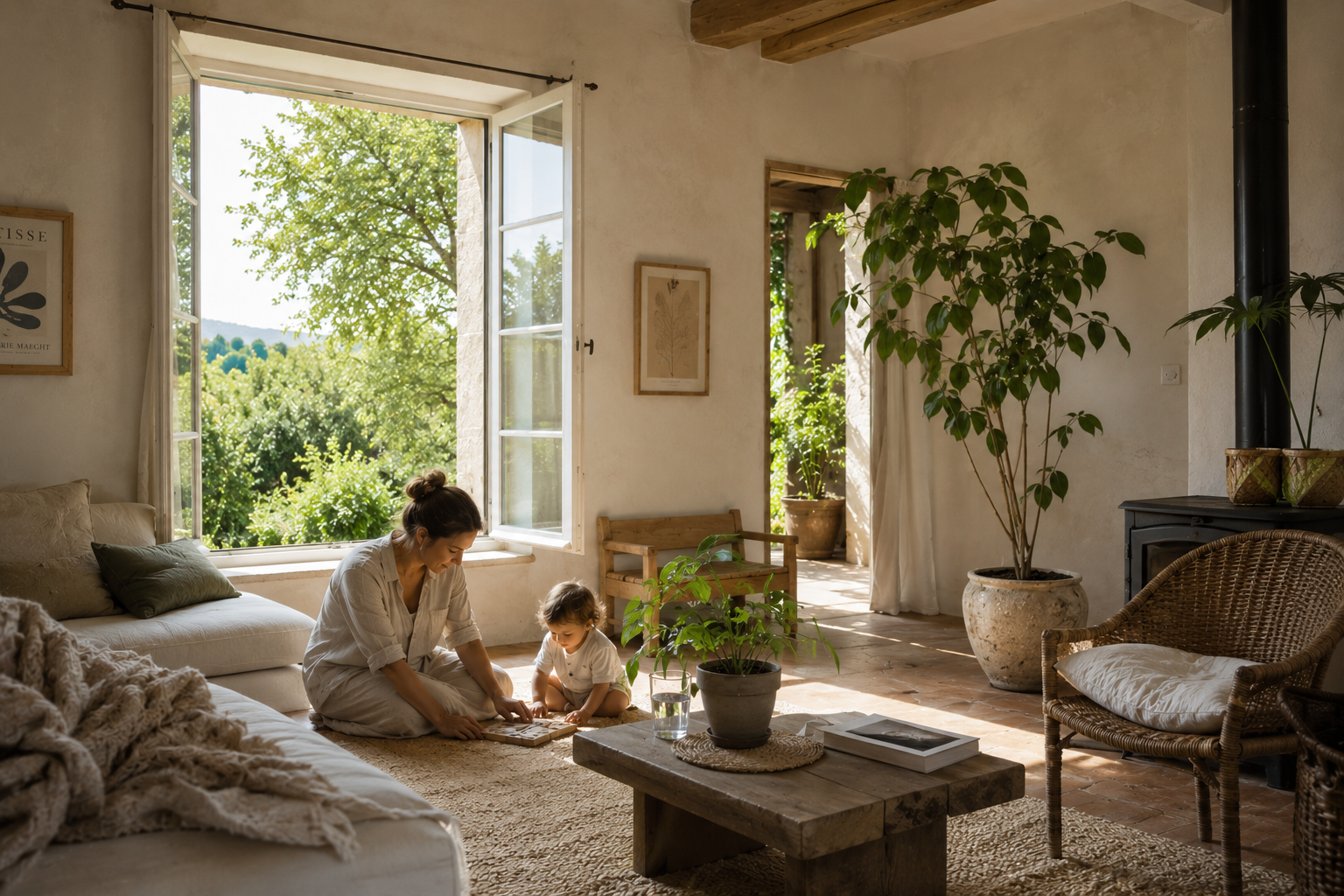
Housing is not only a financial or practical matter. It is one of the fundamental factors of health and well-being — both physical and psychological. The quality of the place we inhabit profoundly influences our daily lives, often in ways we do not consciously perceive.
The living environment and mental health
Numerous studies show that the quality of the living environment — light, space, noise, proximity to nature — has a direct impact on mental health. Overcrowded or poorly lit accommodation generates stress, fatigue and a reduced sense of control. Conversely, a well-designed, peaceful and naturally lit living space promotes calm, concentration and a sense of security.
The physical dimension of housing
From a physical health perspective, the quality of the building matters as much as the quality of the environment. Moisture, mould, inadequate ventilation, exposure to chemical products in building materials, indoor air quality: these factors have well-documented effects on respiratory and immune health.
Access to nature and its effects
The proximity of natural spaces — a garden, a park, a wood — has measurable effects on well-being: reduction of cortisol (stress hormone), improvement of sleep quality, stimulation of immune function. For those who have the opportunity to choose housing near natural spaces, this dimension deserves to be weighted seriously.
An often underestimated investment
Investing in housing that truly supports well-being — quality of construction, natural light, outdoor spaces, calm environment — is an investment whose returns are measurable in quality of life, but rarely quantified in the financial equation of a property purchase. Yet, over the years spent in a place, these dimensions weigh considerably in the overall experience of inhabiting.