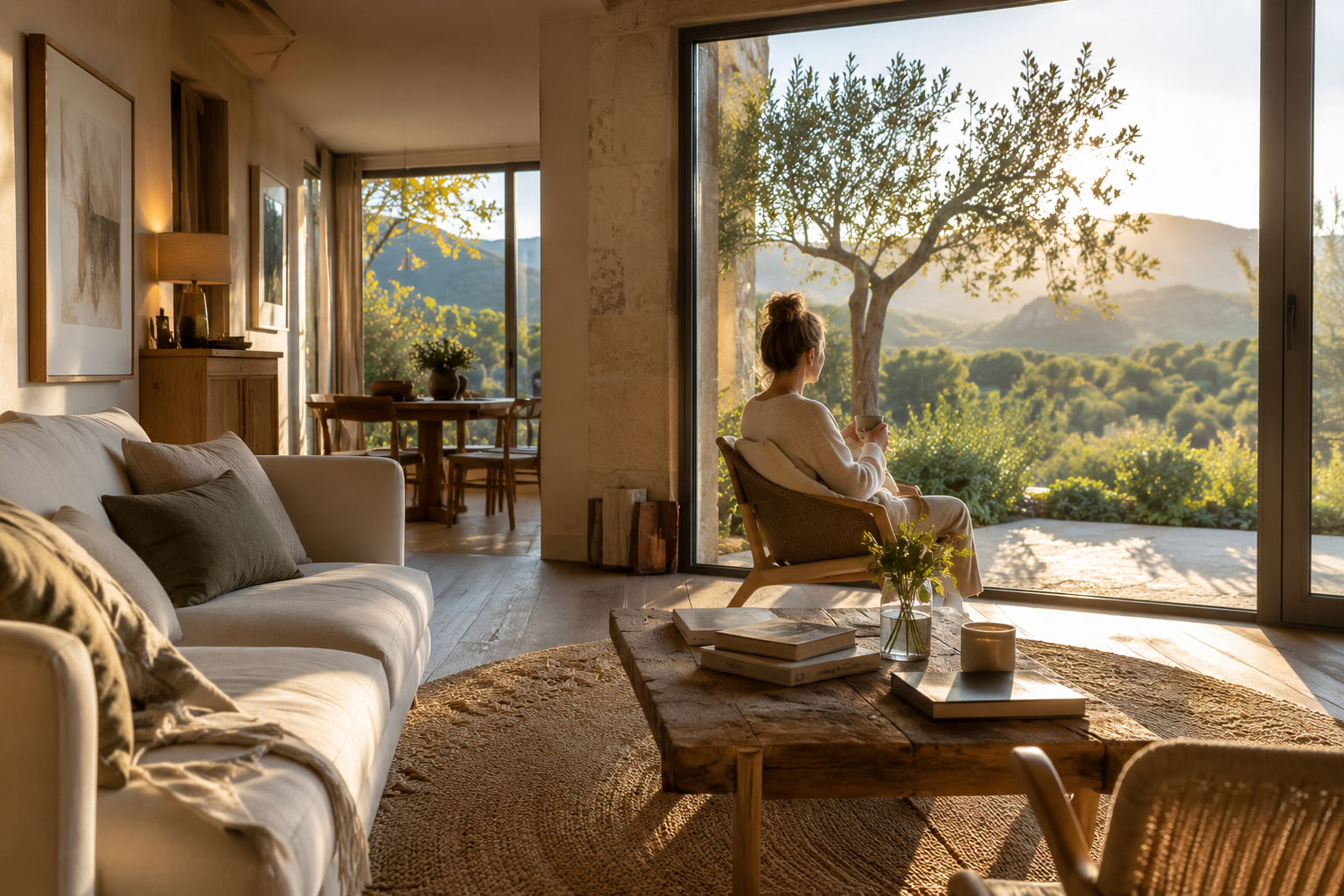
Inhabiting a place is not only a practical act — settling one’s belongings, organising one’s routines. It is also an act of life: choosing where to anchor oneself at a particular moment of one’s existence.
The relationship between place and life stage
Each important period of life corresponds to particular spatial needs: the young professional needs a base that facilitates mobility and professional intensity; the young family needs safety, outdoor space and proximity to schools; the mature adult wants calm, beauty and coherence; the retiree seeks a territory that nourishes daily life without the constraints of maintenance.
The mistake of the permanent and universal place
We often seek the « ideal place for life » as an absolute, permanent object. But a place that is perfect for one stage of life may not be for the next. Recognising this evolution — and allowing oneself to move, transform, adapt one’s living environment to one’s changing life — is a form of wisdom that real estate does not often encourage, but that greatly improves quality of life.
The right question to ask oneself
When considering a property, the right question is not « is this place perfect? » but rather « does this place support the life I want to live right now — and in the near future? » This temporal anchoring makes the criteria more concrete and the decision more grounded.
Character properties and life transitions
Character properties — with their richness, their autonomy, their relationship with the land — are particularly suited to important life transitions: a retirement that represents a true new departure, a creative or professional reorientation, a desire to simplify without impoverishing. They offer space for what is to come.