
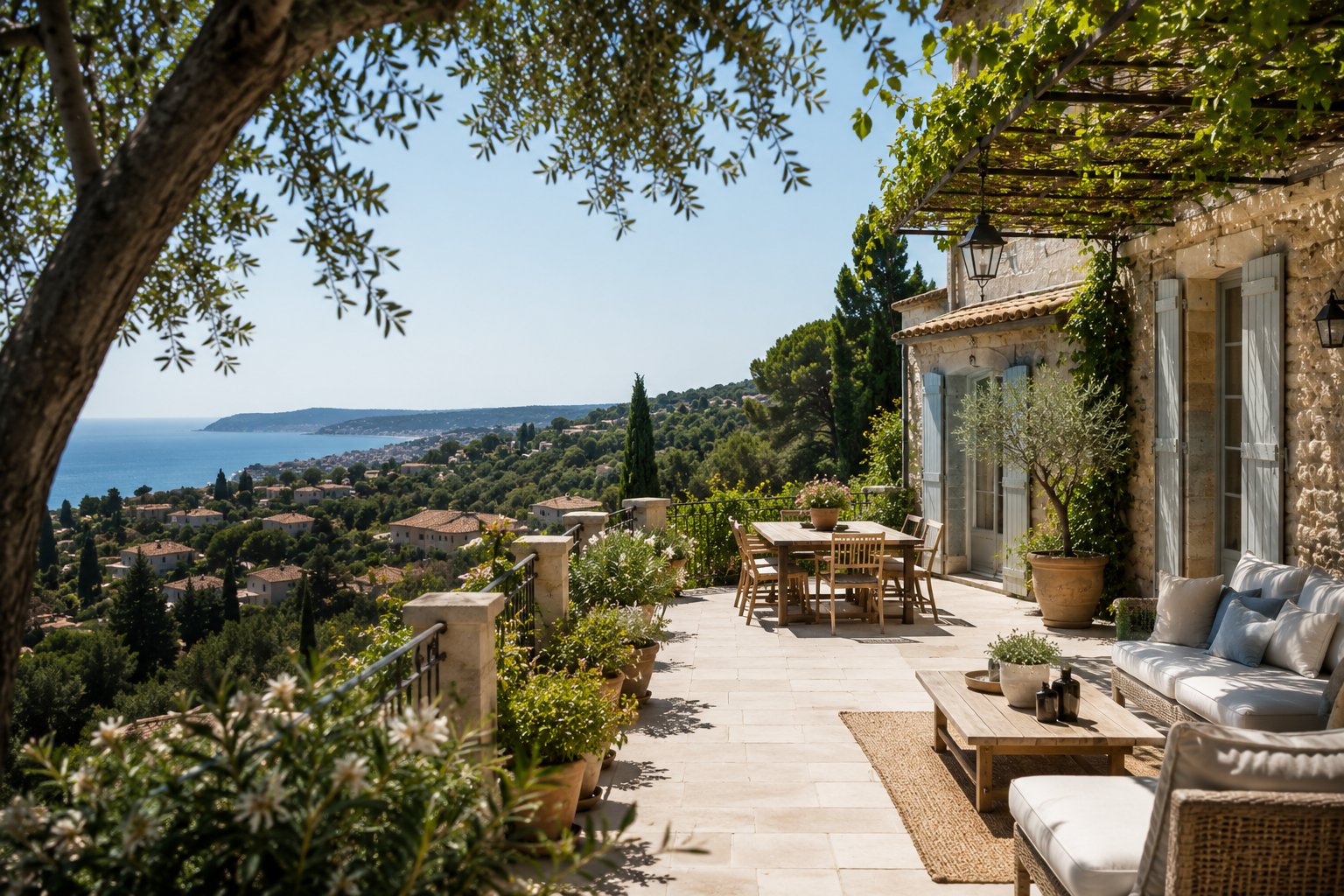
Southern France has always had a particular relationship with climate. But this relationship is changing — and the impact on real estate preferences is significant.
Climate as a primary selection criterion
For buyers considering a move to the south of France, climate is often the primary motivation: sunshine, mild temperatures, possibility of outdoor life for most of the year. But the perception of what constitutes a « good climate » is evolving.
The evolution of preferences
The intensification of heat waves in recent summers has modified the preferences of many buyers. The coastal areas and the Rhône valley — historically very popular — are now perceived by some as too hot in summer. In contrast, inland territories at altitude — Drôme Provençale, Ardèche, Haut-Var, Hérault piedmont — benefit from a climate perceived as more balanced: sunny but less extreme, with a mountain freshness that softens the hottest months.
The impact on property choices
These climate preferences translate directly into property choices: priority given to properties with large trees providing natural shade, indoor-outdoor configurations allowing circulation of fresh air, orientation preferring north-facing terraces or internal courtyards, preference for stone buildings that store freshness better than modern constructions.
Anticipating future developments
Buyers with a long-term perspective are beginning to integrate climate projections into their residential choices: which territories will remain comfortable in 30 years? Which will be affected by water stress, increased risk of fire, or extreme heat? These questions, which would have seemed far-fetched fifteen years ago, are today legitimate considerations in a property purchase.